
the journal · the environment files
your office kitchen is shedding plastic.
heat, abrasion and the five places it actually happens.
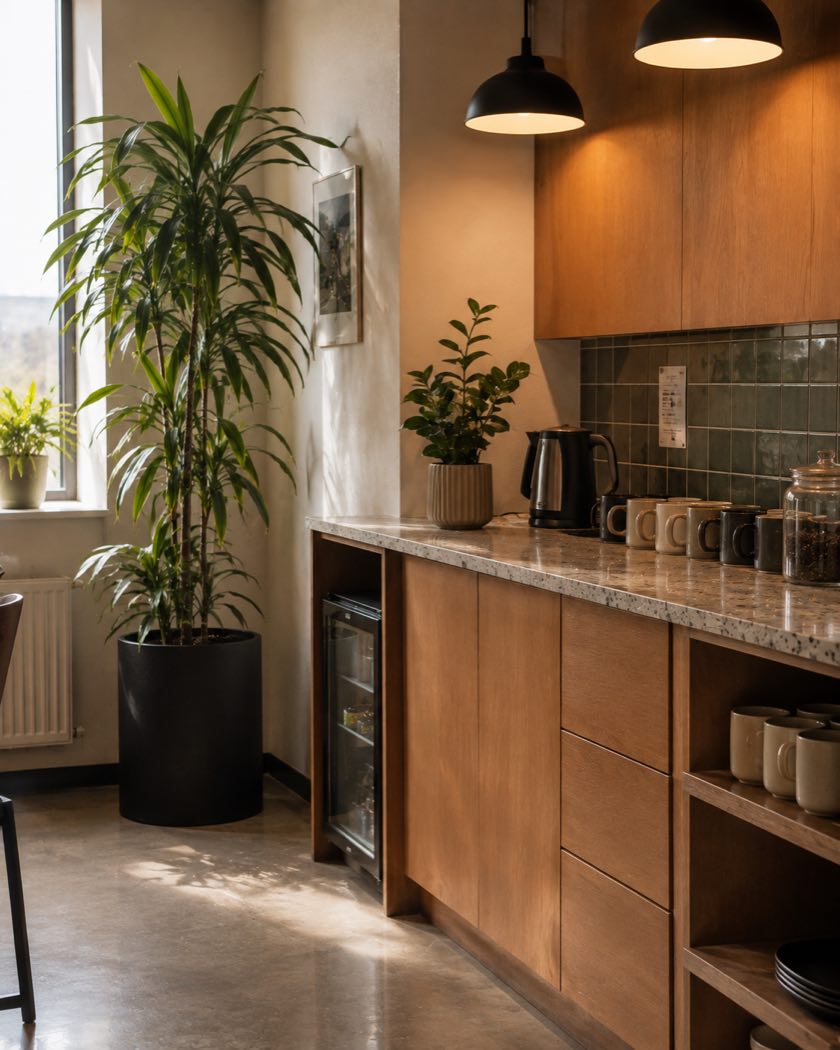
The office kitchen is where this topic gets real for people, because it's the one place plastic routinely meets heat, and heat is the variable that matters.
Nobody's getting to zero. The useful goal is fewer particles in hot food and drink, which is a much smaller and more achievable list of changes than the internet suggests.
the number that got everyone's attention
In 2019 researchers at McGill University published a study in Environmental Science & Technology on plastic teabags, the mesh pyramid kind. Steeped at brewing temperature, a single bag released approximately 11.6 billion microplastic and 3.1 billion nanoplastic particles into the cup.
That's an enormous count, and it's worth understanding why. Nanoplastic particles are extremely small, so the count runs high even when the total mass is minute. The number is arresting; the mass is not large. Both of those things are true and you should hold them together.
heat plus plastic plus liquid is the combination. any two of the three is much less interesting.
the five shedding points
- hot liquid in plastic. Plastic teabags, coffee pods, kettles with plastic reservoirs.
- the microwave. Heating food in plastic containers, and especially plastic film in contact with hot food.
- the dishwasher. Repeated heat cycles degrade plastic surfaces and accelerate shedding over time.
- chopping boards. Plastic boards shed measurably under a knife. This is straightforward abrasion.
- worn non-stick. Once the coating is visibly scratched it's coming off somewhere.
the swaps, cheapest first
- loose leaf, or paper bags. This costs nothing and removes the largest single number on the list.
- decant before microwaving. Glass or ceramic. Thirty seconds of extra washing up.
- a wooden chopping board for anything you cut a lot. Not a full kitchen replacement. One board.
- replace scratched non-stick when it's scratched. Not before, not years after.
- glass or steel for the things you reheat repeatedly. Storage containers see the most heat cycles.
Note what isn't on this list: throwing out everything plastic you own, buying a filtration product, or feeling guilty. The list is short because the evidence supports a short list.
why a plant company is writing about teabags
Honestly? Because you asked. This comes up in walkthroughs more than almost anything else, usually in the kitchen, usually while we're working out whether the windowsill gets enough light.
We're not going to pretend our product addresses it. Plants don't remove microplastics from a room, in the same way they don't purify your air, and we'd rather say so plainly than let a vague implication do work for us.
What we'll do is answer the question accurately when it comes up in your kitchen, and then get back to the part we're actually qualified for.
sources
- Hernandez, L. M., Xu, E. G., Larsson, H. C. E., Tahara, R., Maisuria, V. B., & Tufenkji, N. (2019). Plastic teabags release billions of microparticles and nanoparticles into tea. Environmental Science & Technology, 53(21), 12300–12310. pubs.acs.org
- Cox, K. D., et al. (2019). Human consumption of microplastics. Environmental Science & Technology, 53(12), 7068–7074. pubs.acs.org
groundwork
we design it once, then we keep it alive.
real plants for commercial spaces in williamsburg, yorktown, jamestown and newport news. there's an installation at the william & mary entrepreneurship hub you're welcome to walk through.
book a walkthrough