
the journal · the environment files
the plastic in your household dust.
where it comes from indoors, and the four things that actually reduce it.
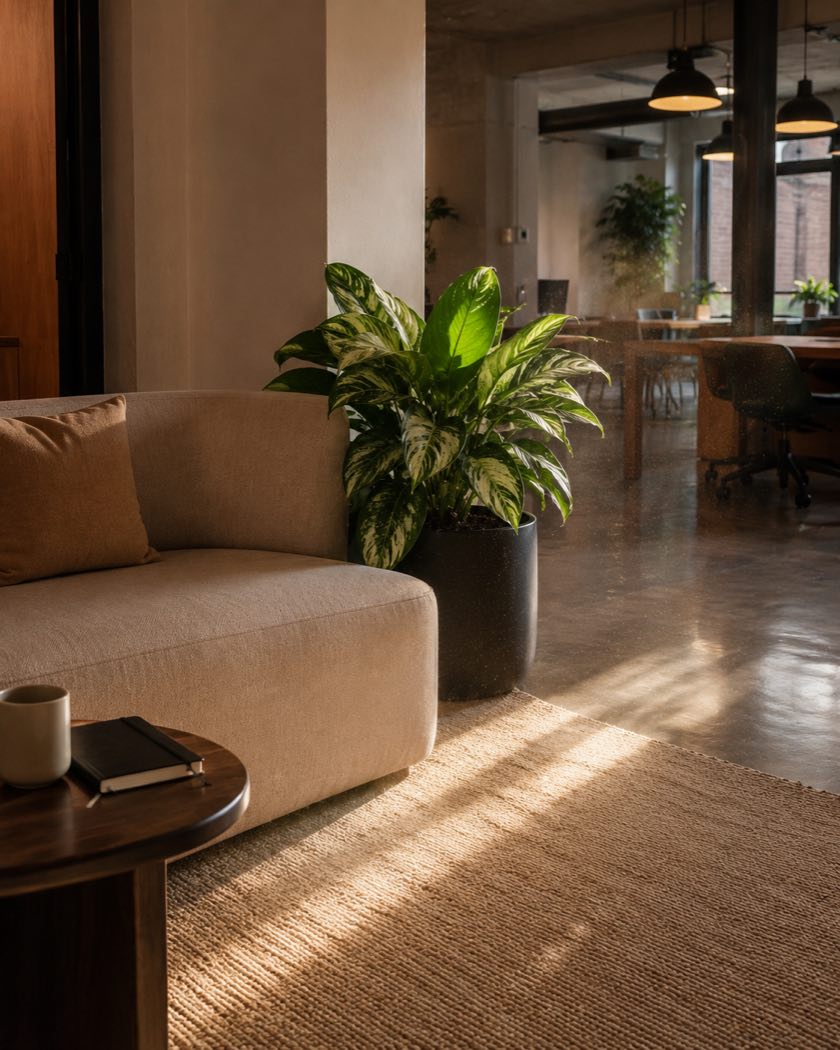
Dust looks like it comes from outside. Mostly it doesn't. Indoor dust is largely the room itself shedding: skin, textile fibres, and worn fragments of everything plastic the space contains.
That last category is the one people have started asking about.
the number, stated carefully
In 2019, a team led by Kieran Cox published an analysis in Environmental Science & Technology estimating human microplastic intake. Depending on age and sex, the figure came out between roughly 39,000 and 52,000 particles per year from food and drink alone. Including inhalation pushed the estimate substantially higher.
Two honest caveats, because this number gets thrown around badly. It's an estimate built from available consumption data, not a measurement taken from anybody. And the health consequences at these exposures are genuinely not established yet. Anyone telling you precisely what this does to your body is ahead of the evidence.
What is established is where it comes from.
where indoor plastic dust originates
- synthetic textiles. Carpet, upholstery, curtains and clothing shed fibres continuously, and most commercial carpet is polypropylene or nylon.
- worn plastic surfaces. Laminate, vinyl flooring, cable sheathing, keyboard housings. Anything that gets touched, scuffed or walked on is abrading.
- resuspension. This is the big one. Dust that's already settled gets kicked back into the air every time somebody walks across the room, and then settles again. The same particles circulate for a long time.
the reservoir isn't the air. it's the floor.
That last point matters because it changes what actually works. If most of the material is sitting in soft surfaces and getting stirred up, the intervention that matters is removal, not filtration.
four things that reduce it
- vacuum with a real HEPA filter. Ordinary vacuums pick dust up and blow the fine fraction straight back out. This is the highest-value change on the list.
- damp-wipe hard surfaces. Dry dusting relocates particles into the air. A damp cloth removes them from the room.
- take shoes off where that's plausible. Outdoor particulate, including tyre-wear microplastics, arrives on footwear.
- fewer synthetic soft furnishings, where you're choosing anyway. Not a rip-it-out instruction. A when-you-replace-it one.
what we won't tell you
A plant will not filter microplastics out of a room. Nothing on a shelf will. Leaf surfaces do collect some settled particulate, which is real, and it's also nowhere near a meaningful intervention at room scale.
This is the same shape of claim as the air purification story, and we treat it the same way: the mechanism exists, the magnitude doesn't survive contact with an actual room.
We write about it because our clients ask, they're in the middle of a lot of noise on this topic, and the useful answer is boring. Vacuum properly, wipe with something damp, and be a bit more careful about what you buy next. That's most of it.
sources
- Cox, K. D., Covernton, G. A., Davies, H. L., Dower, J. F., Juanes, F., & Dudas, S. E. (2019). Human consumption of microplastics. Environmental Science & Technology, 53(12), 7068–7074. pubs.acs.org
- US EPA. Indoor particulate matter. epa.gov
groundwork
we design it once, then we keep it alive.
real plants for commercial spaces in williamsburg, yorktown, jamestown and newport news. there's an installation at the william & mary entrepreneurship hub you're welcome to walk through.
book a walkthrough